
Native American Heritage Month, also referred to as American Indian and Alaska Native Heritage Month, has its roots in the early 20th century. In 1915, the annual congress of the American Indian Association directed its president to ask the U.S. to observe American Indian Day. The U.S. government didn't act until 1983, when President Ronald Reagan proclaimed May 13 American Indian Day, and in 1990 President George H.W. Bush signed a joint congressional resolution designating November as National American Indian Heritage Month.
UO Native Americans: Beyond Land Acknowledgements
By Guest Contributor Jason Younker, Assistant Vice President, Advisor to the President on Sovereignty and Government-to-Government Relations
If you stand in the center of campus at the Erb Memorial Union amphitheater, you will see nine flags flying proudly, each representing one of Oregon’s federally recognized tribes. Since 2014, the University of Oregon’s land acknowledgement has been symbolized through these flags. While the flags have only been flying since 2014, they were the result of a university president-to-sovereign domestic government relationship and acknowledgement established many years earlier. On each Indigenous Peoples’ Day, the Native American Student Union (NASU) holds a retirement and replacement ceremony for the flags to recognize the longstanding contributions that tribal governments have made at the UO.
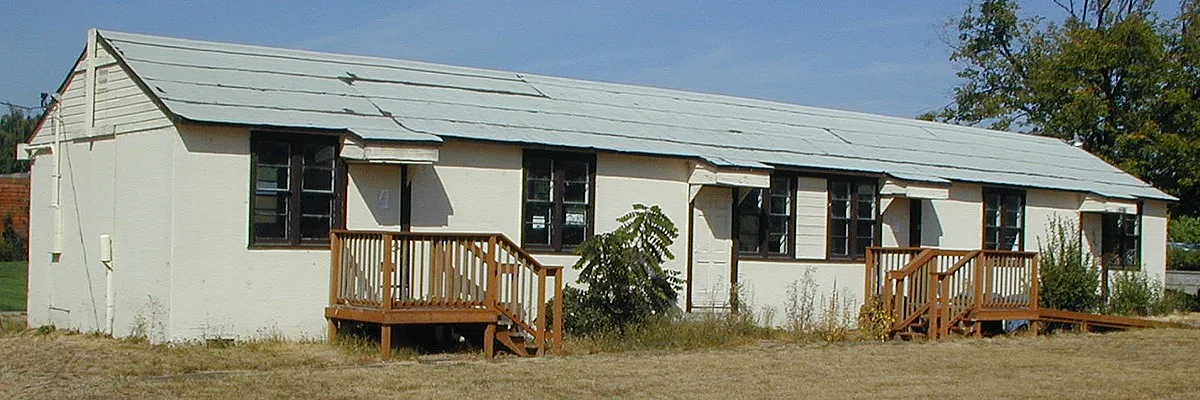
The American Indian and Alaska Native (AIAN) student population is now at an all-time high, having grown from a handful to 308 scholars. This is the largest AIAN student population the UO has ever enrolled. In 1969, Native students requested a dedicated space from the UO where the startup NASU group could meet. The UO dedicated a retired Army barracks (then located behind the UO Law Center) to NASU. Over the years, this building was frequently used for potlucks, study sessions, thesis and dissertation defenses, and numerous community activities. By 1994, the barracks had been condemned twice, the toilet had fallen through the floor, and a tree had grown up through the center. Despite these conditions, the Many Nations Longhouse was a place of warm respite, hospitality, and a home away from home for AIAN students.
By 1995, newly appointed UO president, Dave Frohnmayer asked the tribal chairs from Oregon’s federally recognized tribes to serve on the Native American Advisory Council (NAAC). At this meeting, President Frohnmayer indicated that his priority was to help align UO programs with tribal education needs. He asked the tribes to identify the most desired college degrees needed on the respective reservations. The NAAC indicated business, law, education, environment and medical sciences. Beyond programmatic alignment he wanted a healthy president-to-tribal government relationship and that replacing the old longhouse was necessary for the future students.
In 1997, President Frohnmayer established the Residency by Aboriginal Rights program (RAR), which identified all tribes affiliated with the State of Oregon before government removal. RAR tribes qualified for in-state tuition regardless of their current state of residence (e.g. Modoc of OK were originally residents of Southern Oregon). With the cost barrier partially eroded, the old Longhouse was razed. In 2001 the tribes were asked to bless the land set aside for the new longhouse and broke ground. Each Oregon tribe contributed to the $1.3 million construction cost costs and in familiar Potlatch tradition, tribal contributions exceeded the amount provided by the UO. In 2005, the Many Nations Longhouse (MNL) grand opening was standing room only with mostly tribal members and native students and alumni. A wooden plank from the old longhouse was mounted in the MNL to remind patrons of our humble beginnings and those who came before us.
As a result of the relationships established over 50 years earlier, AIAN academic excellence has grown tremendously. The Northwest Indigenous Language Program (1997), Sapsikwala Teacher Education Program (2002), Native American Indigenous Studies (2013), Kalapuya Ilihi native resident hall (2017), Oregon Tribal Student Grant and Home Flight Scholars Program (2022), AIAN International study program at University of Otago, NZ (2022), and entering its 56th year, the UO Mother’s Day Powwow is the longest operating college powwow in the US. These are a few academic and support programs that resulted from acknowledgement and relationship building.
Land acknowledgements come in many forms. Most are simply words read at the beginning of a meeting. At the UO, action behind promissory words has resulted in unprecedented student enrollment, program development and success. Starting with President Frohnmayer, then President Lariviere, and President Scholz, each has visited all tribal reservations in Oregon to better understand where the AIAN students are coming from and to ensure academic and support programs are reaching their intended demographic. The NAAC continues to explore what can be accomplished now and over the next 50 years. The UO opportunities started with dedicated space in 1969 and action in our acknowledgement has led to success.
Read Stories That Heal: Commemorating Native American Heritage Month through Theater and Tradition, by Vice President Yvette Alex-Assensoh.